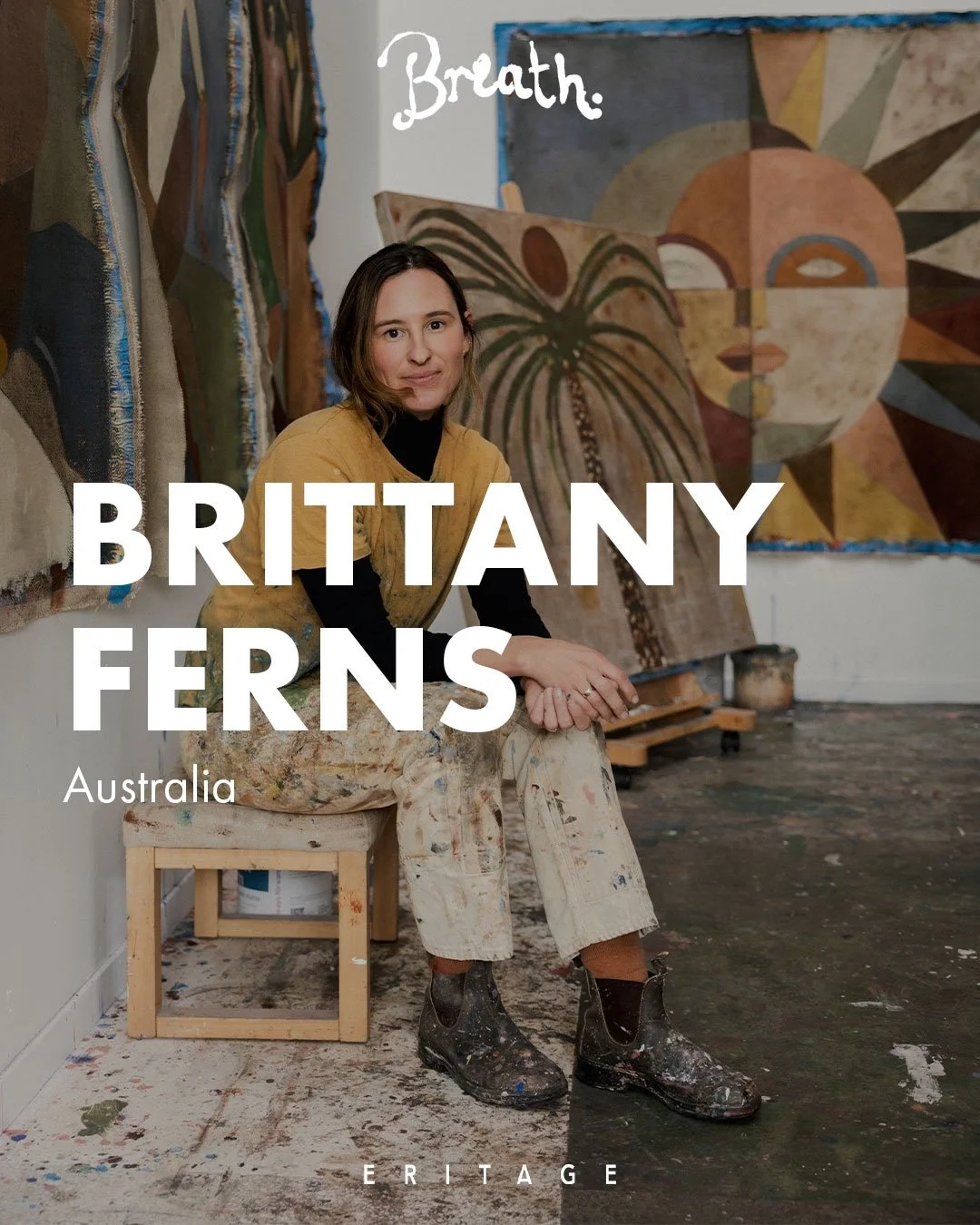
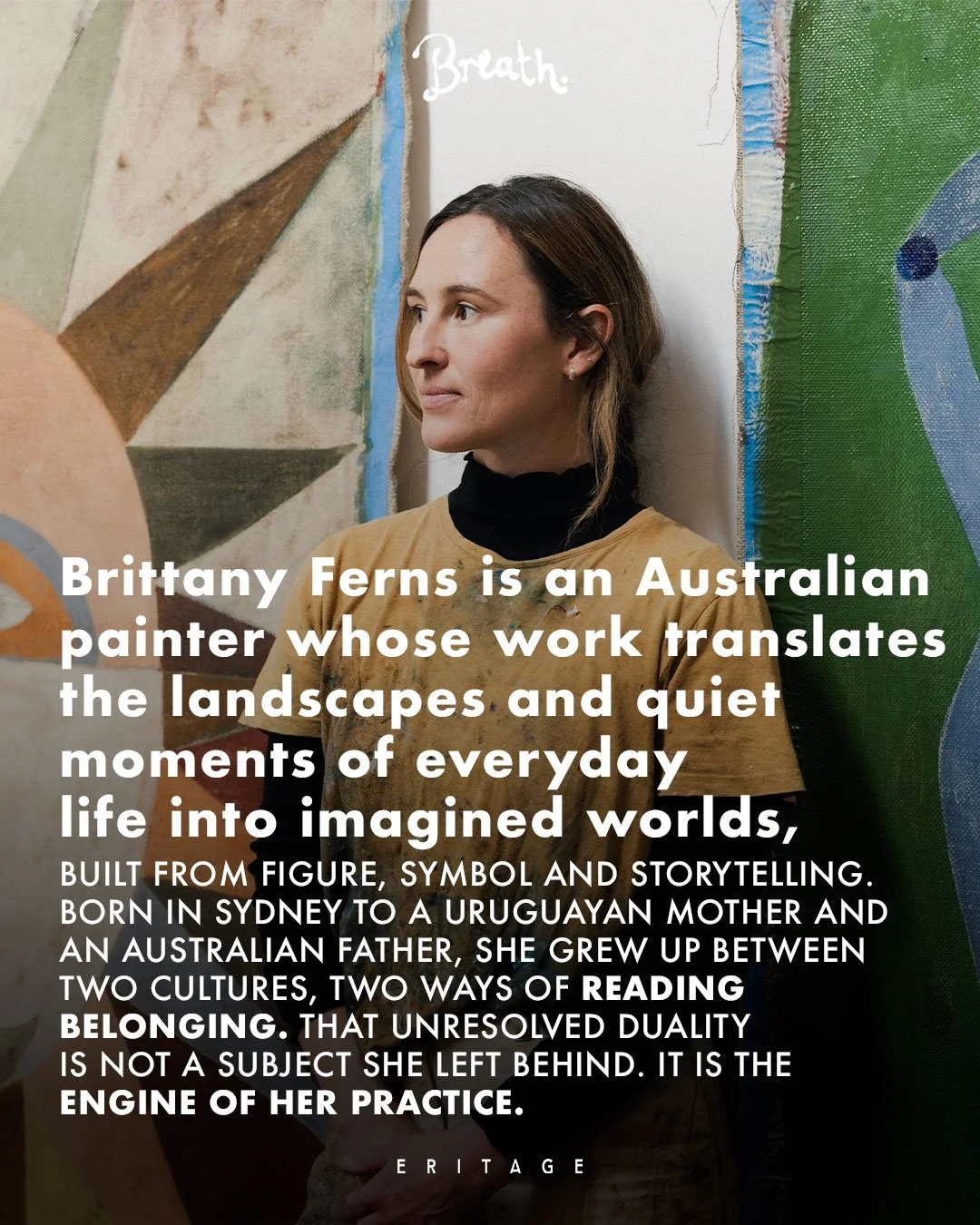
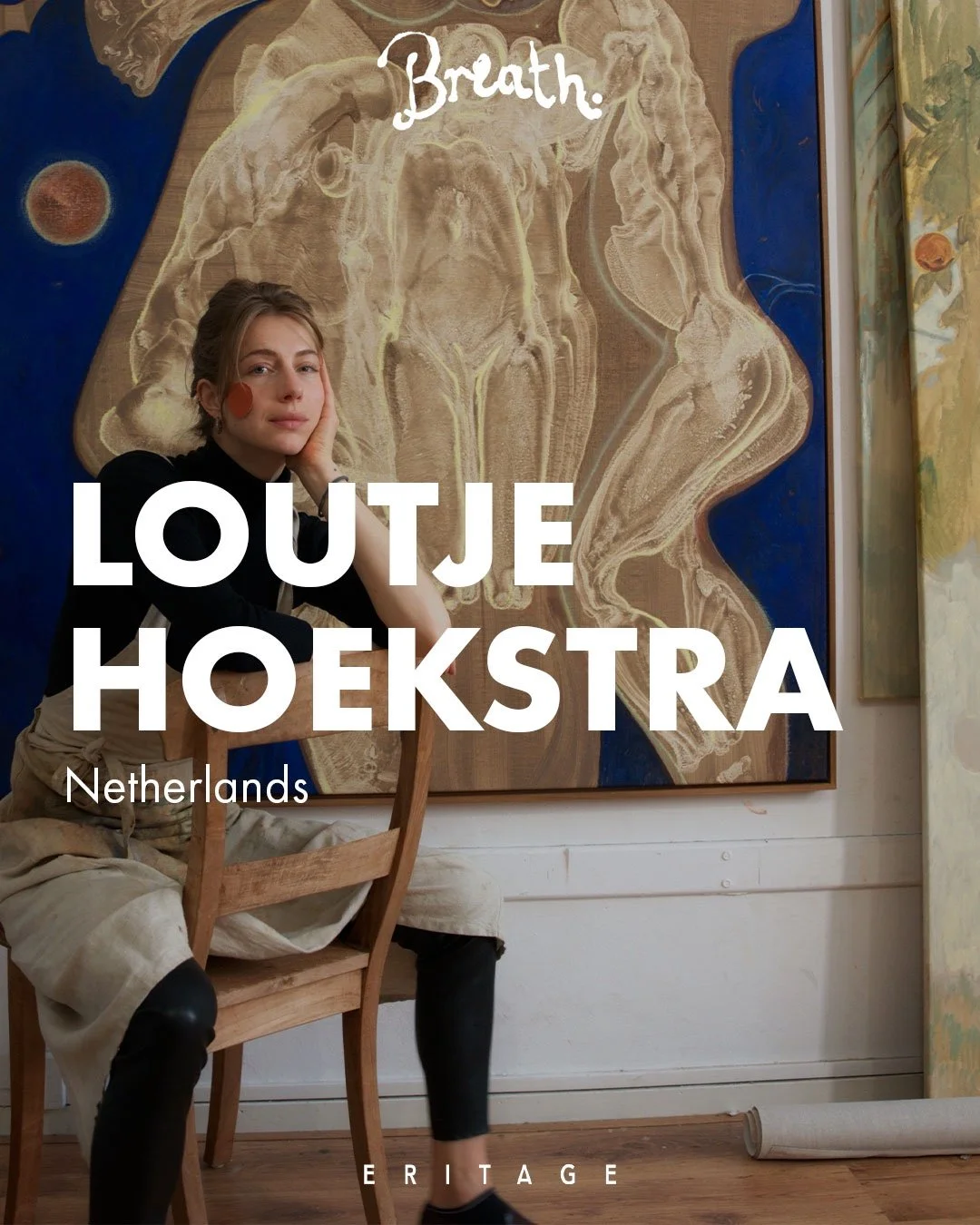
Brittany Ferns [AUS] · Flora Castiglia [ARG] · Loutje Hoekstra [NL] ·
Group Show in Lisbon, Portugal
“Breath is the most intimate connection to our surroundings.”
— James Nestor, Breath: The New Science of a Lost Art
Before thought, language, or identity, the first thing we do when we arrive in this world is:
B R E A T H E
It is the silent companion we depend most on and the first thing we forget.
There is an intelligence older than any civilization we recognize today. For millennia, ancient peoples
across every continent knew how to breathe with the earth, from the Maya reading the sky, to the
Egyptians aligning the body with the stars, to Vedic traditions codifying the breath itself as a spiritual
practice. Forests, rivers, stones, and silence are part of what connects the human and the
environment, the body and the territory, the sacred and the everyday. Connection to the breath is our
most honest way of inhabiting the world as humanity, and it is disappearing.
Colonization has seized land, extinguished our connection with the wisdom of the earth, and, as a
consequence, severed our ability to breathe together with it. With every language that fades, every
culture that dissolves, every territory that is devoured, we lose a way of breathing together with the
colors of the world.
BREATH is an exhibition born from and for this moment, as a collective act of connection
through the self.
We are living within a culturescape that leaves no room for digestion. We are overstimulated by
information, becoming decentralized, desensitized, and disoriented by the pace of reality. Perhaps it
is not the world outdistancing us, but a subtle surrender of a resource we have held and forgotten.
There is a collective restlessness: the economic and social structures we built are out of alignment
with nature, human dignity, and the life cycles that govern the collective heartbeat.
BREATH asks us to pause, sense, and meet the present moment by returning to the simplicity
of our natural rhythms.
The environmental crisis is the visible consequence of a world that has learned to extract without
reciprocity, and to grow without limit. The model we inherited is built on the premise of eternal growth,
a promise that leaves no margin for rest, no permission to breathe, no room for the cycles that govern
all living things. What we call sustainability is too often a renegotiation of the same logic, dressed in
new language.
Could it be that the mind’s supremacy has forsaken the very body from which its heart beats?
The tension living between our shoulders may be nothing less than the body’s own quiet resistance, a
subtle yet strong nudge toward centeredness, toward breathing with the present moment.
It is a lot. Please, inhale. Pause. Exhale slowly.
BREATH speaks to a deeper crisis: a profound disconnection from the self. The rites of passage that
once marked life’s thresholds have quietly been replaced by faster, thinner substitutes, bypassing the
sense and feeling of life in connection to the human experience that moves through our very veins. A
true sense of belonging is something felt with intention in the present moment, in relation to the body,
the other, and the earth. When we breathe consciously, we attune ourselves to all three.
When we don’t know the answers, perhaps breathing is an act of resistance and return.
Every collective transformation begins with an individual gesture, that of looking inward through our
natural capacity to meet the moment. Breath is the presence in which we find our own frequency and
rhythm. To find one’s rhythm is to move in harmony with others, with nature, with the cycles that have
always transcended the singular ‘self’ into a collective humanity.
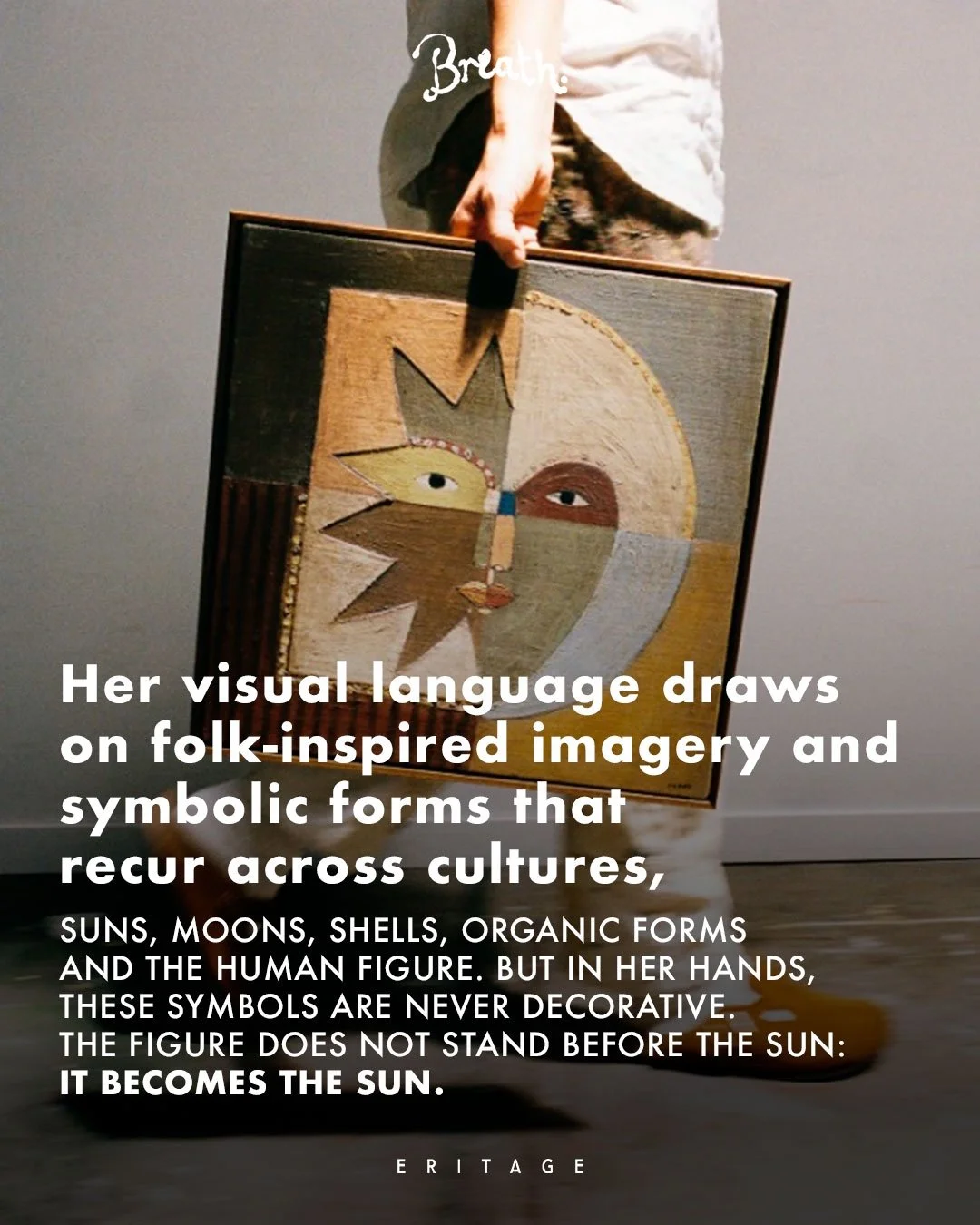
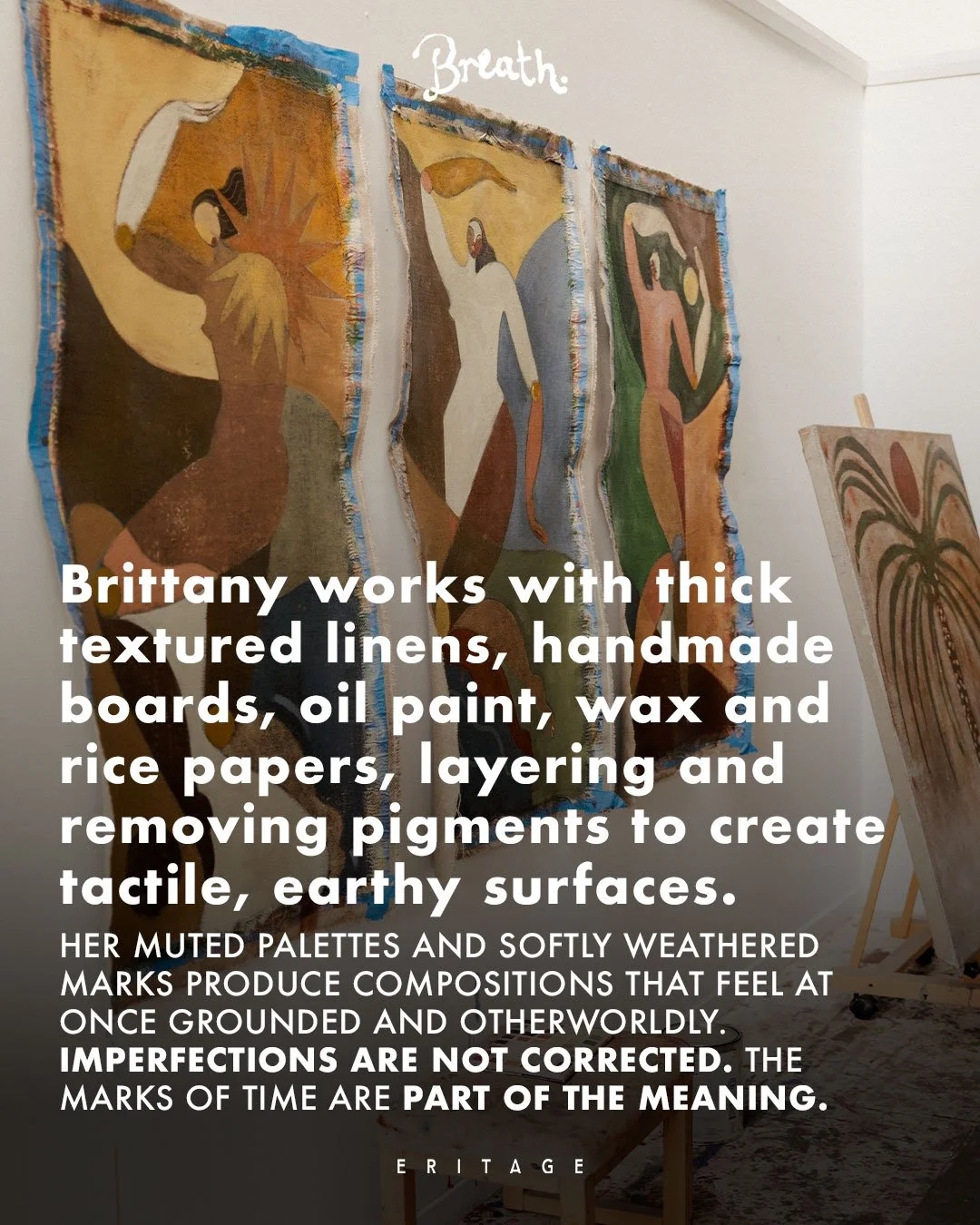
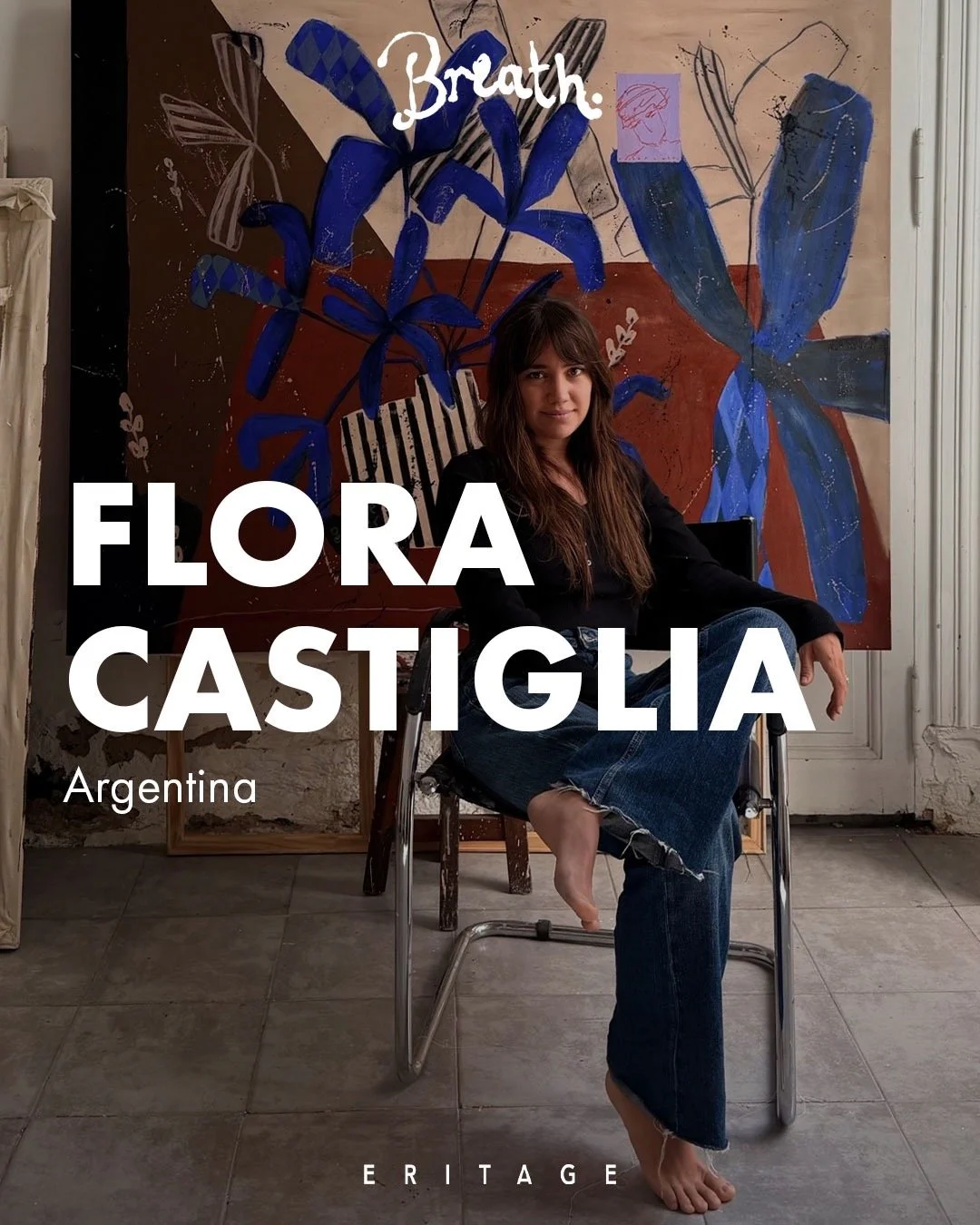
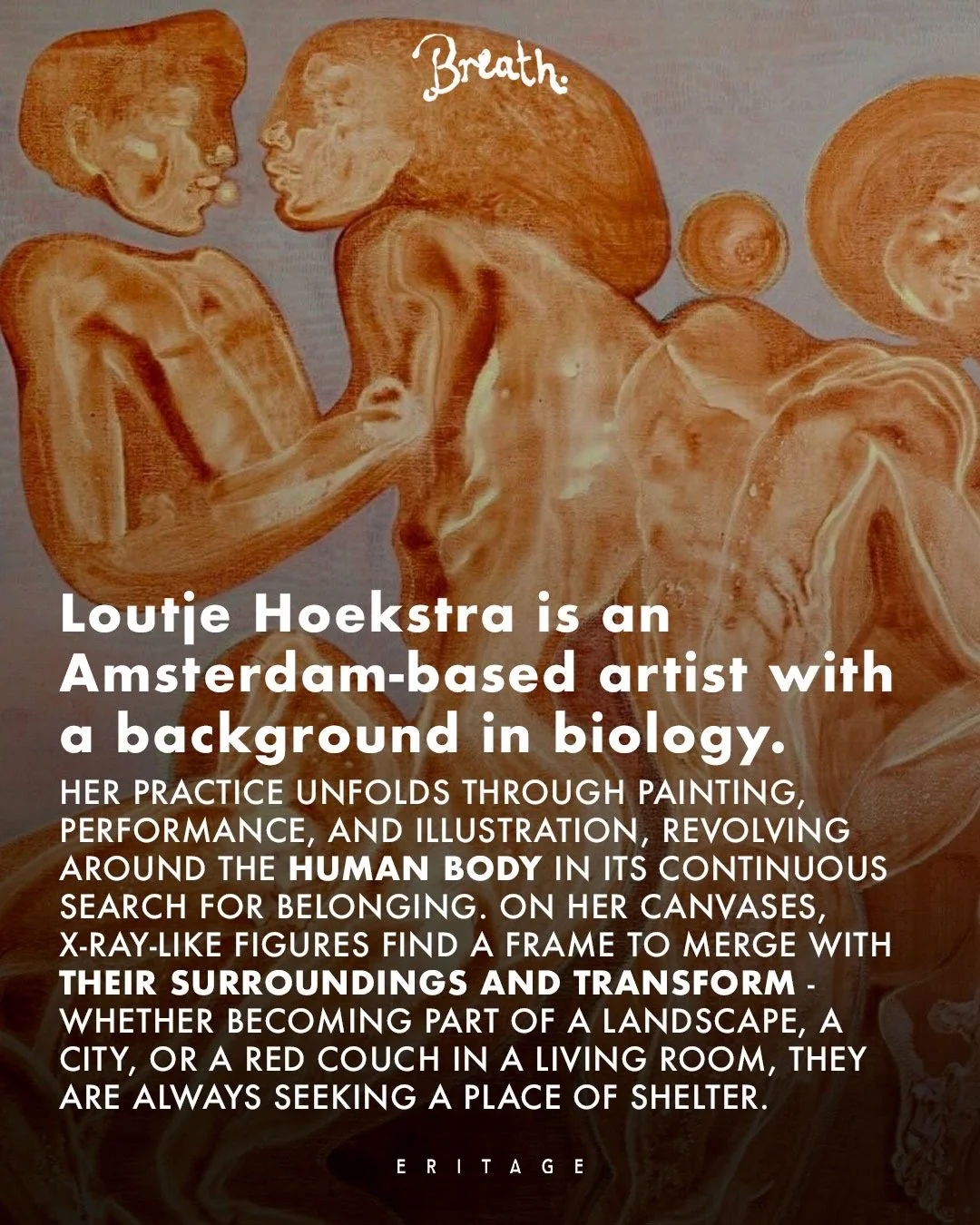
BREATH brings together three women artists from three continents — Brittany Ferns [AU], Flora
Castiglia [AR], and Loutje Hoekstra [NL]. Ferns works through the mythological: figures that dance
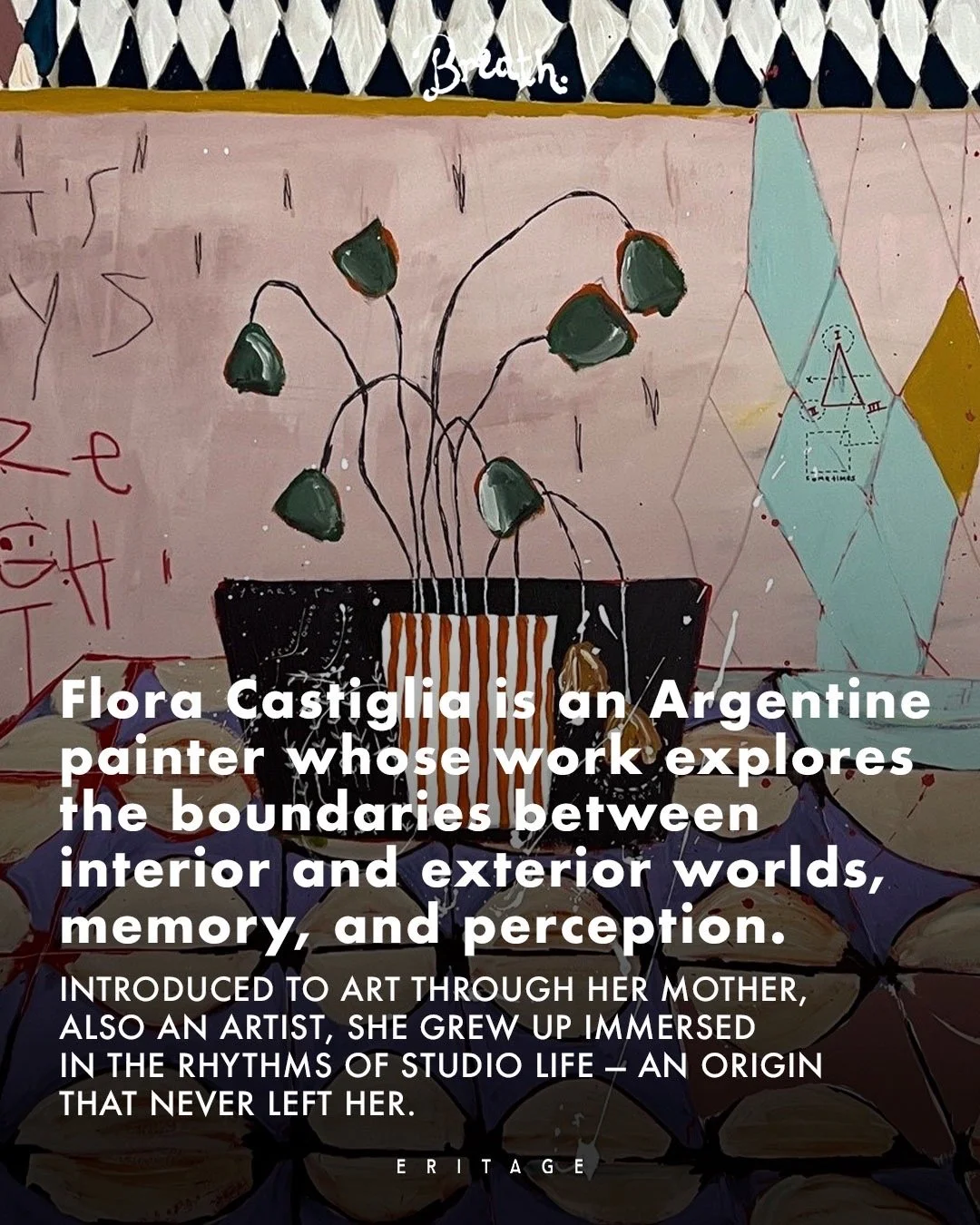
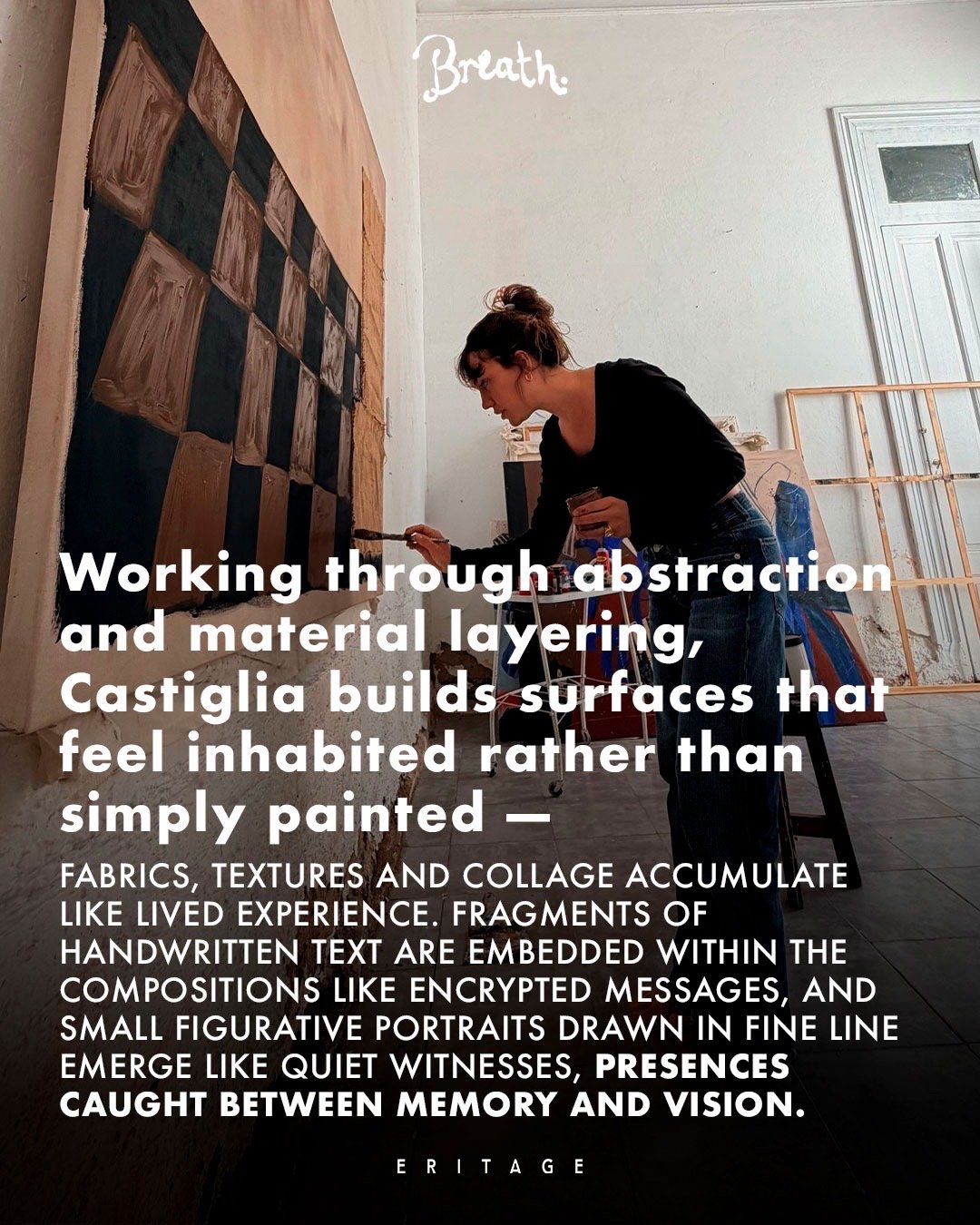
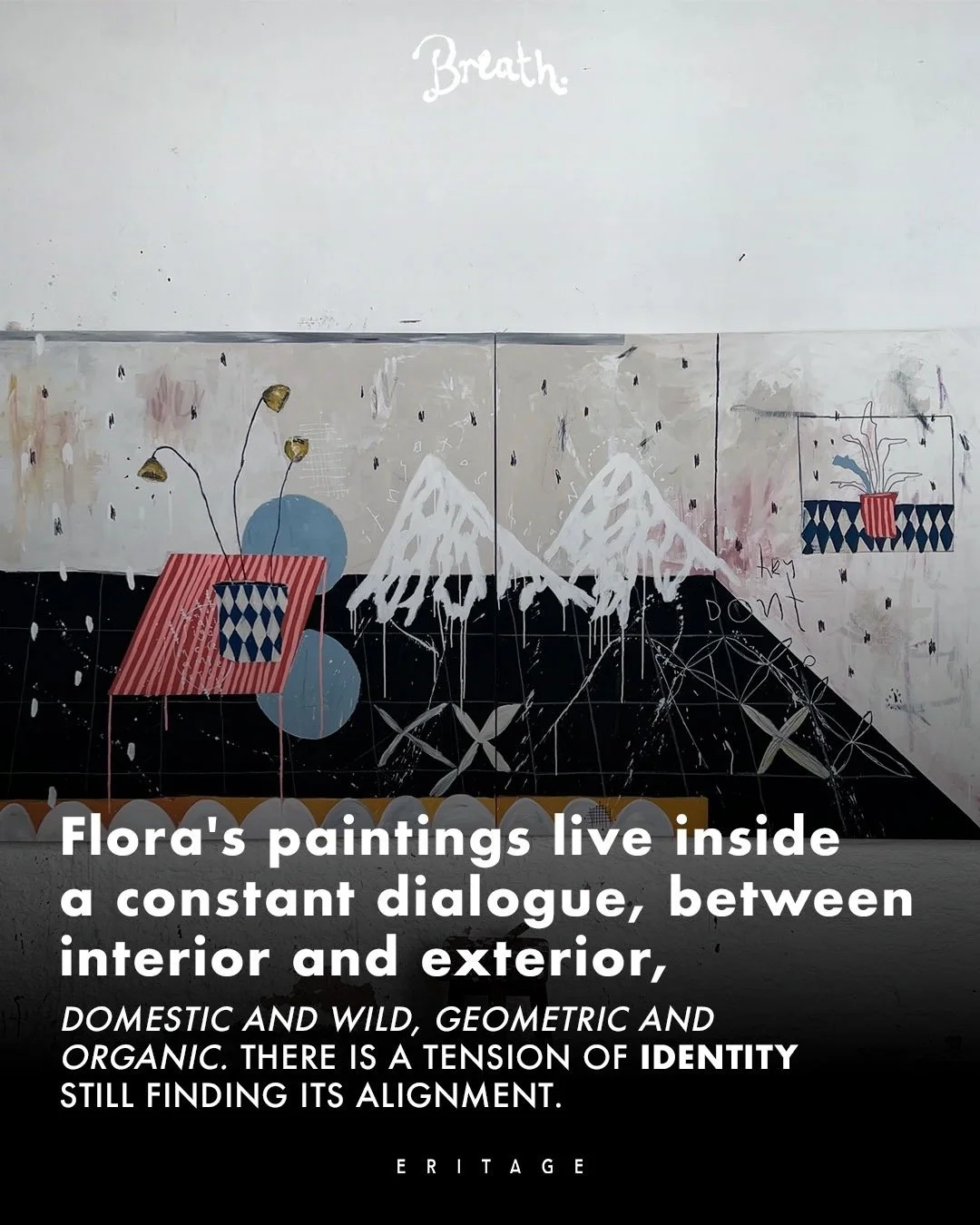
with the cosmos, a sun that becomes the moon, bodies that merge with the landscape. Castiglia holds
the tension between domestic and wild botanical forms that connect and push through structured
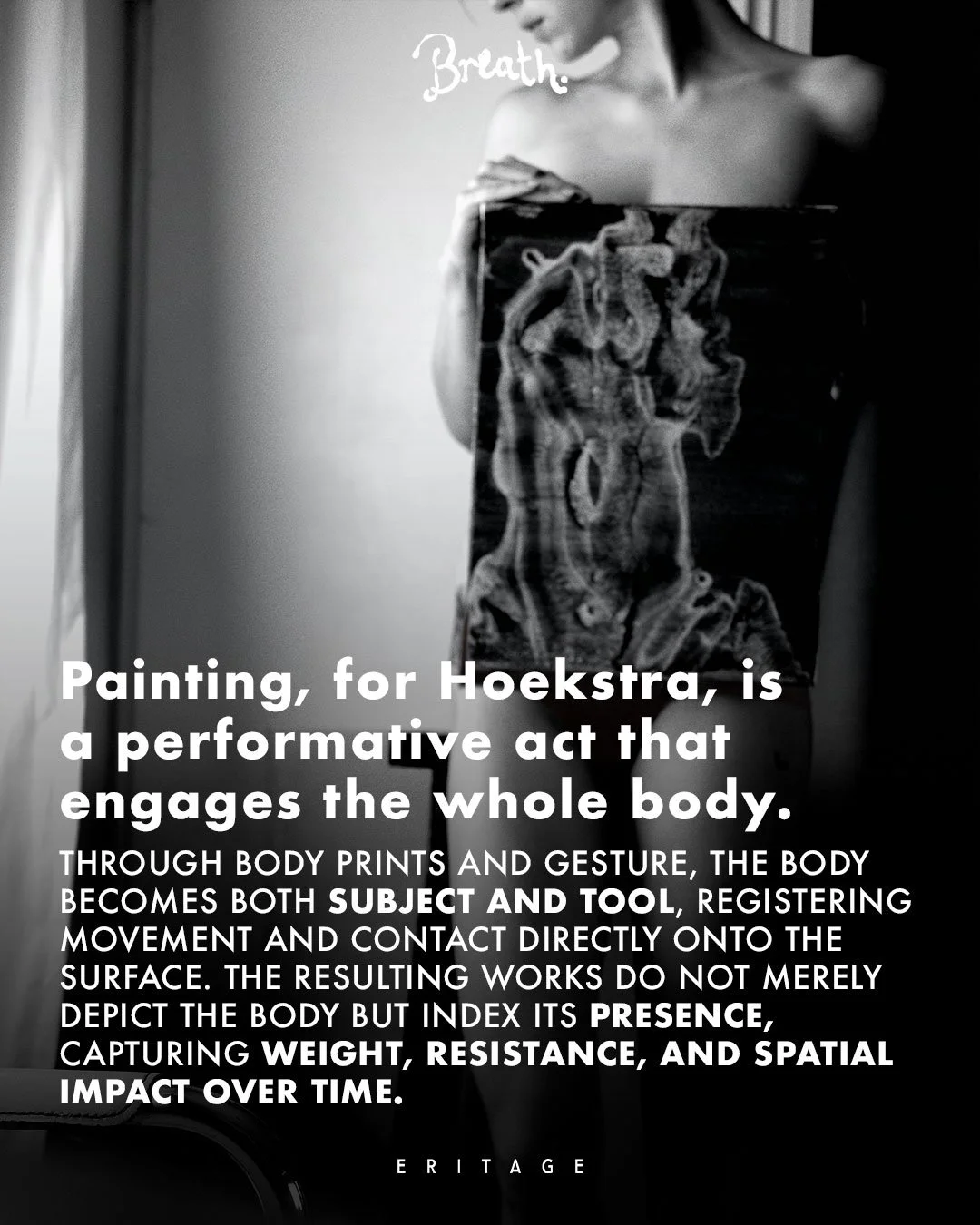
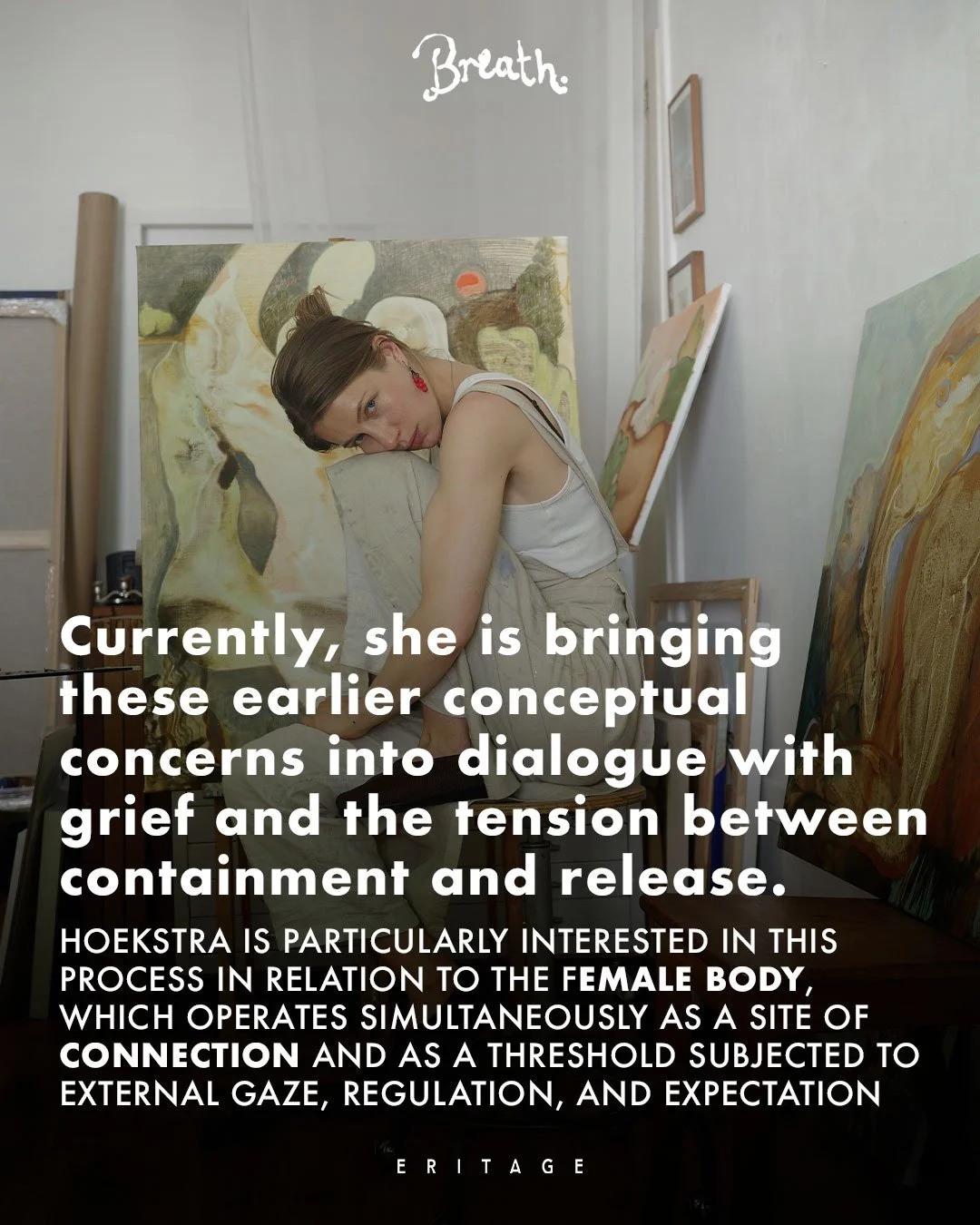
spaces, untamed, refusing to be contained. Pure instinct. Hoekstra works from the inside out with the
body as both subject and tool, a site of power and fragility. Through gesture and direct contact with
the surface, the body registers its own presence, proposing surrender as the place where the self is
reconfigured. Bodies become landscape. Contrary to the erasure of difference, the exhibition
embraces it through integration and coexistence.
When we change the way we breathe, we quietly change the way we exist. True connection comes
alive in that subtle shift towards alignment in one body, one room, and one community.
Here is space to
b r e a t h e
curatorial text: Anna Mouchref
…