![PORTRAIT [the first] woodcarving on wood and acrylic � 42x57x5cm � 2022.jpg](https://images.squarespace-cdn.com/content/v1/57d82f4d15d5db47a2eb9ff6/873eae76-fd66-4dc5-8462-63295c59e3d5/PORTRAIT+%5Bthe+first%5D+woodcarving+on+wood+and+acrylic+%EF%BF%BD+42x57x5cm+%EF%BF%BD+2022.jpg)
INQUIRE TO PURCHASE THIS PIECE
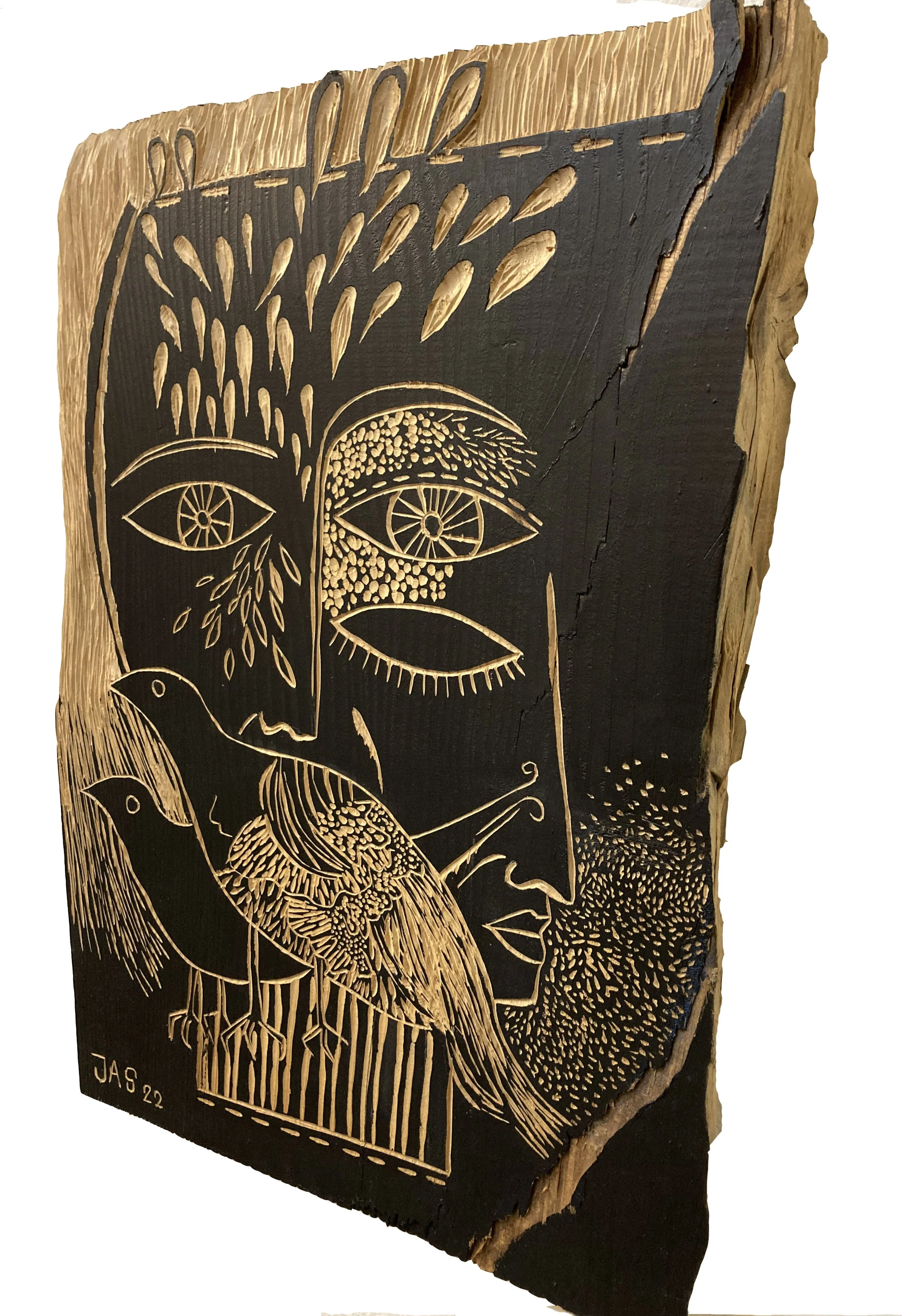
detail: woodcarving by JAS
JAS
b. 1981, Porto, Portugal. Lives and works in Portugal.
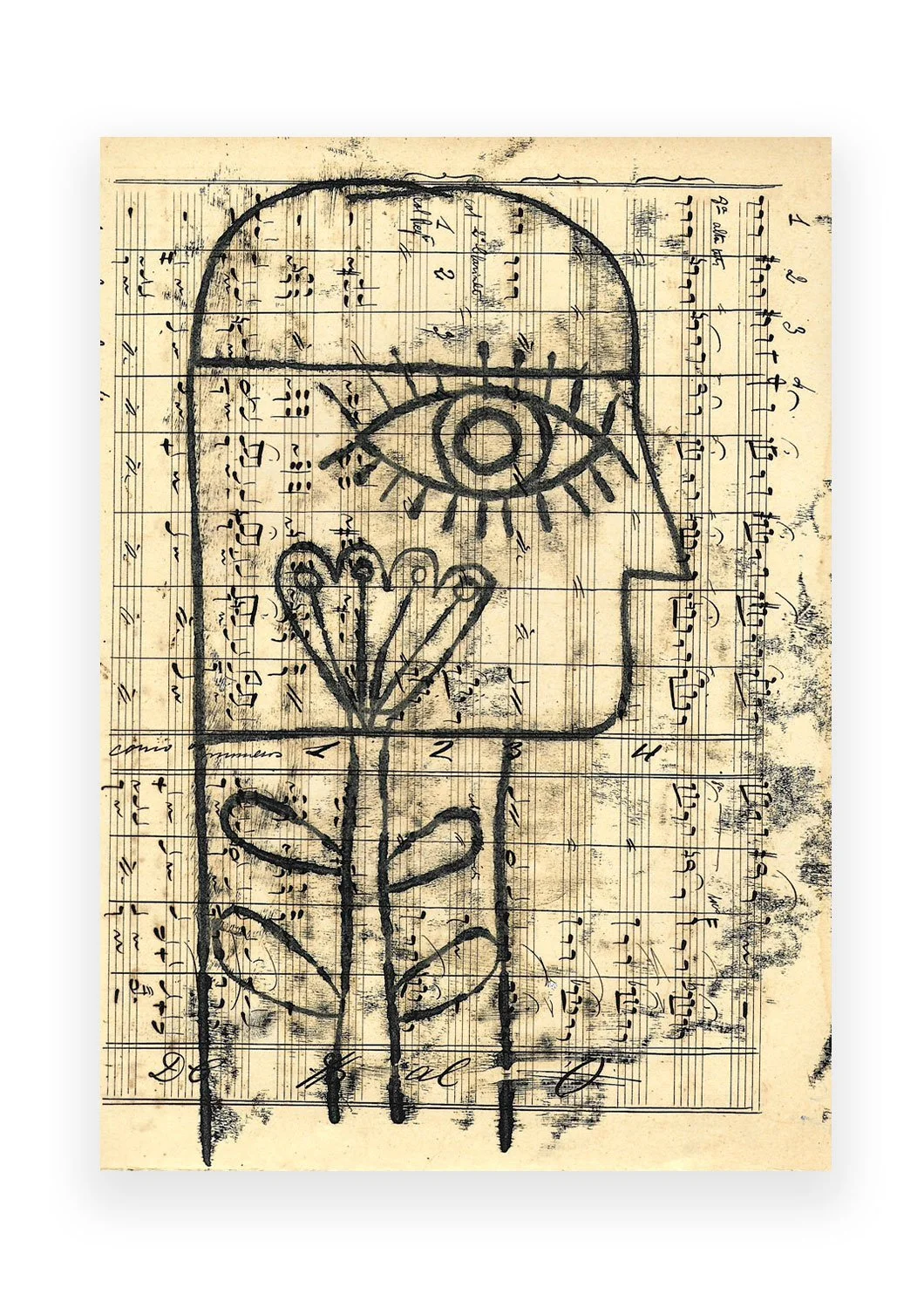
João Alexandrino — known as Jas — is a multidisciplinary artist working across installation, performance, video, painting, scenography and drawing. At the centre of his practice lies the human face — painted, carved, fragmented into alphabets, multiplied across portraits of people he has known. Jas's research moves in constant orbit around a process of self-knowledge — each face an attempt to find, in his words, "the energy of humanity."
He paints and carves portraits — often his own, often those closest to him or strangers — as a way of understanding himself more clearly: a private practice of awareness that, made visible, becomes something the viewer can also enter. If slowing down to truly observe a person has helped him find clarity, his work proposes that it might do the same for whoever stands in front of it. Be the observer, with no judgement.
This same instinct — to meet the unfamiliar not with distance but with presence — extends beyond portraiture into how Jas responds to the world at large: natural disasters, conflict, the upheavals that mark a place and its people. In Mozambique, this led to O Puro e o Ímpio: not an outsider's record of tragedy, but an attempt — in his words — to welcome it. "Art is potentiation. It takes what may be little and proposes the infinite." During the isolation of the pandemic, this same concern crystallised into Alphabet: a series in which each face stands for a letter, the letters together spelling a single instruction — OBSERVE.
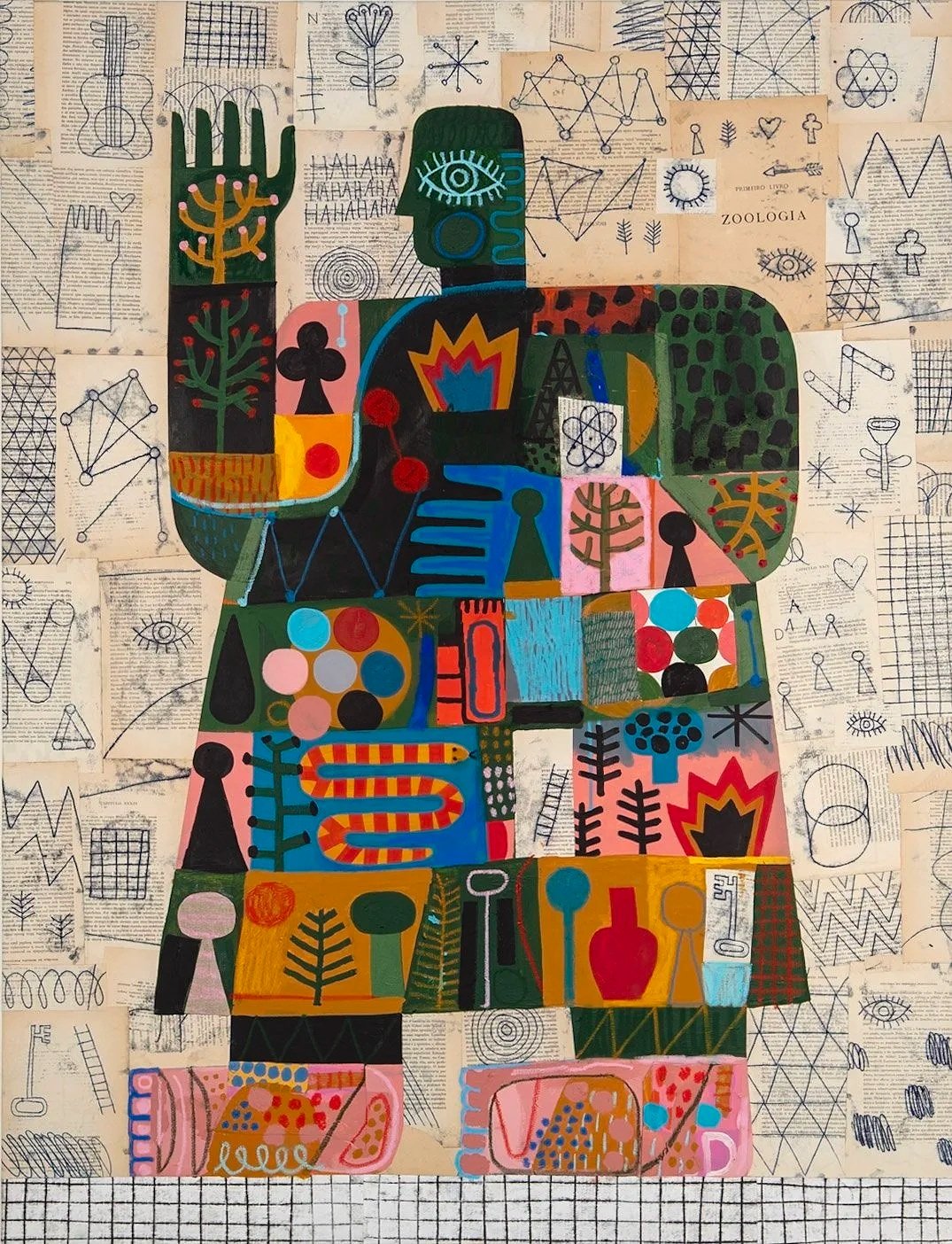
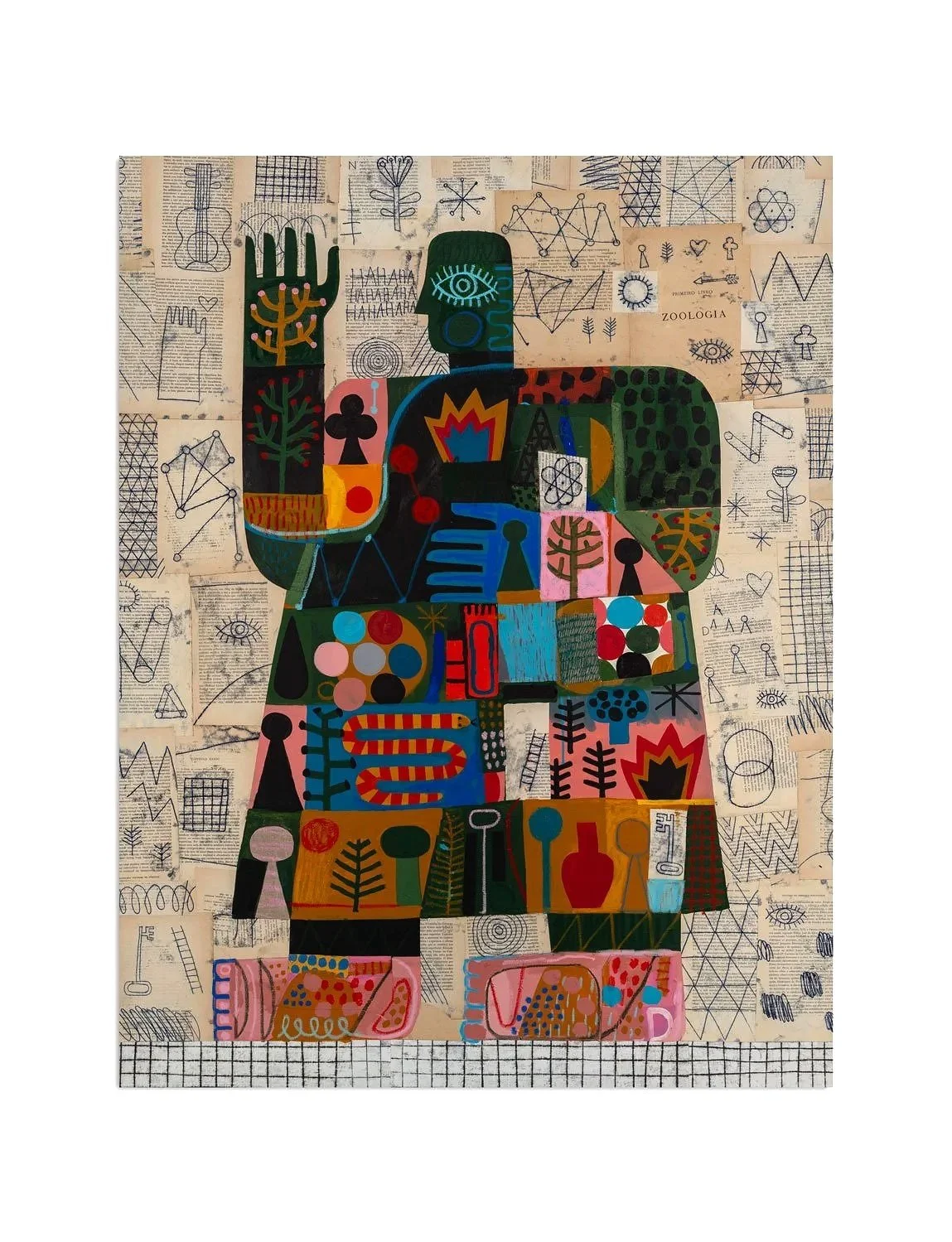
In 2021, Jas presented Floresta Negra at Eritage Studio Gallery, Lisbon — a body of work born, in his words, as "a nascent way to solve a permeating anxiety." The gesture moved straight from a thick, honeyed ink tube onto a rough, brown support symbolising earth or bark — repetition and modular organisation functioning like a visual prayer. "Black forests work as mandalas, or chords that flutter energetic waves that alternate in different sensations — establishing an analogy with tensegrity, where motor neurons and sensory neurons complement each other, like geodesic domes." These forests, he explains, were contextualised as a measure for a lighter, perhaps anxiolytic path through everyday life.
For Drinking from the Same River, Jas presents works in wood carving — a technique with origins in ancient China, carried across centuries and continents until it found, in Northeastern Brazil's cordel tradition and in West African sculptural practice, two of its most distinct and enduring forms. These lineages converge, in his hands, into carved heads that resist easy reading. Eyes carved as spirals or targets stare back at whoever looks at them. To look at one of Jas's portraits is to discover that the gaze travels both ways.
Jas's work is held in the Berardo Collection, Portugal, where his Faces installation extends over more than ten metres, and he has exhibited across Europe and Africa.
This artwork is part of the Eritage exhibition “Drinking from the Same River” | Esta obra integra a exposição “Drinking from the Same River” na Eritage Studio Gallery

woodcarving sculptures by JAS | image: Hugo Inglez

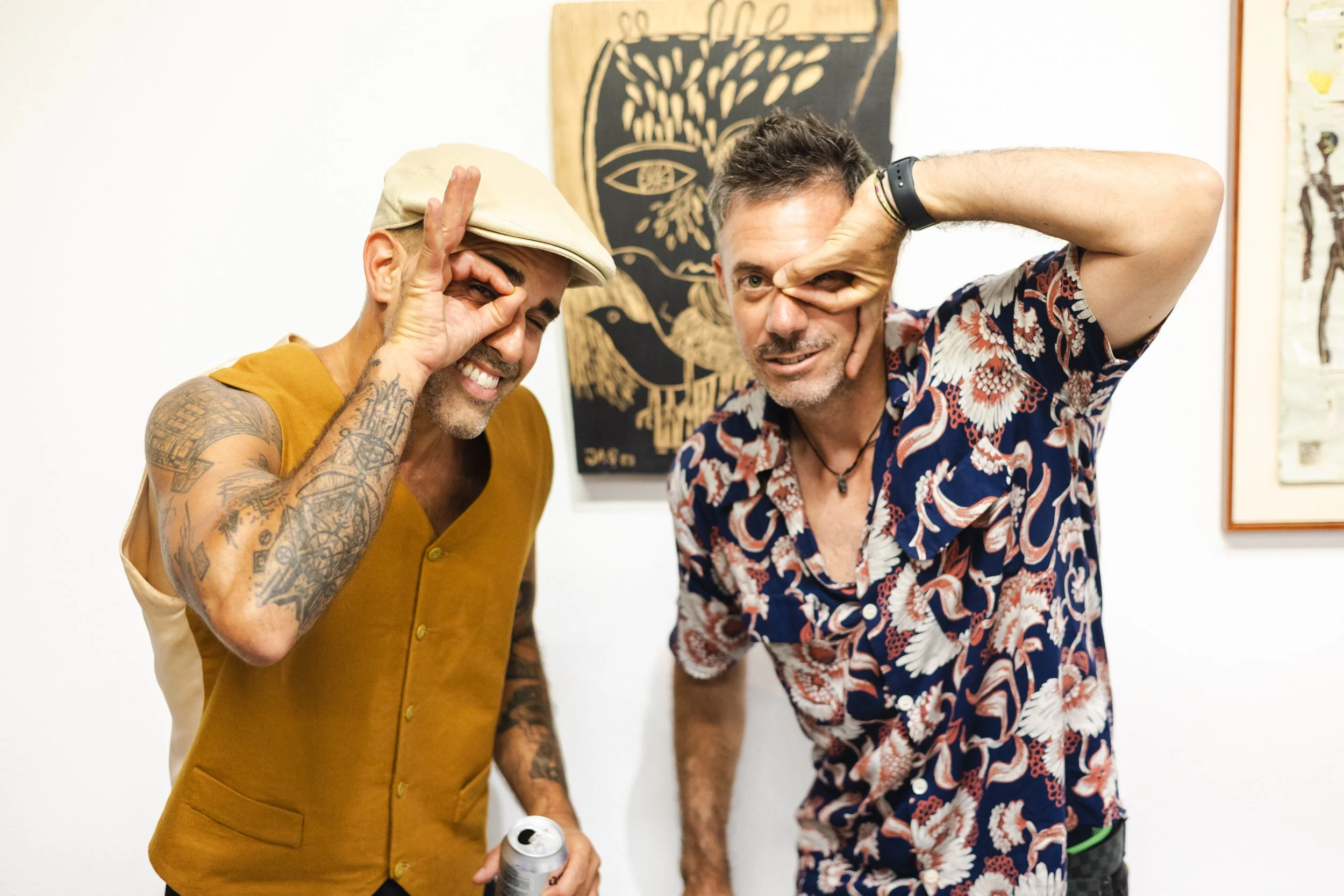
Opening of the exhibition “Drinking from the Same River”